
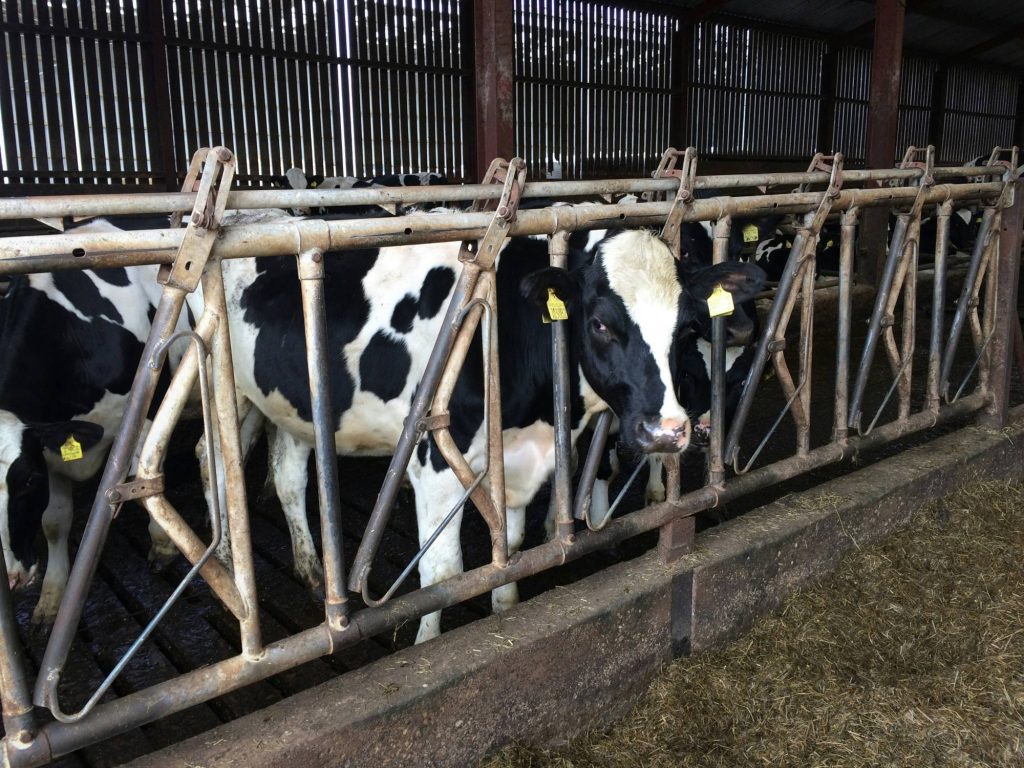
The UK is entering an important phase in the modernisation of livestock traceability. Defra’s Farming Annual Report 2025–26 records £56 million of expenditure on the Livestock Information Transformation Programme, covering continued development of a comprehensive multispecies traceability service for England, the launch of the Livestock Unique Identification Service 2.0, ministerial endorsement of the Low Frequency standard for bovine electronic identification in England, and a successful proof of concept for a Central Animal Database intended to support livestock data sharing across Great Britain.1
This is important infrastructure, and it raises a second question. Once we can identify an animal and trace its movements more accurately, how do we preserve and connect the evidence that accumulates around that animal throughout its life? Identity is not the same thing as evidence. A traceability system can tell us which animal we are dealing with and where it has been, but decisions about disease, welfare, food safety, assurance and trade may depend on a great deal more: veterinary observations, treatments, diagnostic samples, laboratory results, post-mortem findings, certifications, processing events and records held by organisations well outside the national traceability system.
The next stage of livestock digitalisation therefore needs to be about more than better movement records. It needs to be about evidence chains. That is the same argument we made in Connected Data Is Not Enough, applied to the one programme where it is about to be tested at national scale.
The direction of travel is clear. The Livestock Information Transformation Programme is intended to replace the existing species-specific traceability systems in England with a modern multispecies service, and the first of those services will cover cattle: it is expected in 2027 and will replace the Cattle Tracing System. Defra also expects bovine electronic identification to be introduced for newborn calves in England during 2027.2
Electronic identification matters because it reduces dependence on visually reading and manually entering identifiers, and Defra explicitly identifies reduced transcription errors and faster, more accurate data capture among its benefits.2 The broader ambition is significant: the department expects the new system to support near-real-time movement reporting, faster decisions during disease outbreaks, improved animal-health and welfare information, stronger food-safety assurance and smoother trade.2
The annual report also contains a useful indicator of the scale of the underlying data-quality problem. During 2025–26, work under the programme resolved nearly 9,000 County Parish Holding data cases and corrected records relating to close to one million animals.1 That is not an argument against digitisation; it is an argument for taking provenance, corrections and version history seriously as digitisation accelerates, because a correction that nobody downstream can see is only half a correction.
Consider a relatively ordinary disease investigation. An animal has an official identity and moves between holdings. A veterinary surgeon examines it and a sample is taken. A laboratory tests that sample, and the result may depend on a particular test method and a particular version of a standard operating procedure. A subsequent examination may generate another finding, and the animal may later enter an abattoir where further observations or test results are created. Some of those records may afterwards be corrected, and other animals, samples, batches or holdings may need to be linked to the same investigation.
No single organisation holds all of that information, and none should have to. The farm management platform has one role and the national livestock system has another, while a veterinary practice management system, a laboratory information management system, a surveillance database and a processor’s ERP each exist for their own operational purpose.
The temptation in large digital programmes is to solve fragmentation by building a larger database, and that is not necessarily the right answer. The more useful question is whether those systems can remain authoritative for the records they already manage while allowing important evidence to be connected across organisational boundaries. That is where provenance becomes the practical mechanism rather than an abstraction.
The new livestock infrastructure can provide something genuinely valuable: a stronger identity spine, in which an authoritative animal identifier becomes the point around which other evidence is connected. That does not mean the national traceability service should become the repository for every veterinary consultation, diagnostic result, certificate or processor record relating to the animal.
The architectural distinction matters. The national service can remain authoritative for identity and movement, the veterinary practice for its clinical observations, the laboratory for its diagnostic result, the processor for its processing events and the assurance body for its certification. What is needed between them is a way to preserve the relationship between those pieces of evidence — to connect the evidence without erasing its origin, which is a fundamentally different proposition from copying everything into one place. Our technology page sets out the five steps that separation requires.
Take a diagnostic result. If the only thing passed downstream is “positive” or “target detected”, most of the evidential value has already disappeared. A relying party may also need to know which sample was tested, which animal that sample came from and who took it; which laboratory issued the result and whether that organisation was authorised or accredited for the relevant activity; which analytical method was used and which version of it applied; when the test was performed; whether the record has since been corrected; and whether what is being viewed is still the same record that was originally issued.
Those details are not administrative decoration. They determine what the result actually means, and the distinction becomes sharper as data is reused automatically. A human investigating a suspicious result may telephone the laboratory, ask for the original report, check the sample number and notice that a corrected report was issued later. A machine will generally consume the value it has been given. If provenance does not travel with that value, automation simply makes poor evidence move faster.
The correction of records relating to close to one million animals is a useful reminder that real-world data changes.1 Records are corrected for entirely legitimate reasons: identifiers are mistyped, holding information changes, a sample reference is entered incorrectly, a laboratory amends a report, or a diagnosis is updated as new evidence becomes available. The important thing is not to pretend that errors will disappear once systems become digital, but to design systems in which corrections are understandable.
When evidence is corrected, an authorised user should be able to establish what changed, when, who changed it, why, and which earlier version it replaced. Downstream systems that have already relied on the earlier information also need some mechanism for discovering that a correction has occurred. Without that, digital interoperability becomes a faster mechanism for distributing stale information.
There is another distinction livestock systems will increasingly have to make. Digital signatures, secure credentials and cryptographic verification can provide very strong evidence about the origin and integrity of a record, but they cannot establish that the underlying biological assertion is correct. A signed diagnostic result may prove that a particular laboratory issued it and that the file has not been altered since. It does not prove that the correct animal was sampled, that the sample was collected properly, that the correct sample reached the laboratory, that the assay was performed correctly, or that the biological interpretation was sound.
Those questions depend on quality management, accreditation, validation, professional judgement and sometimes further investigation. Future livestock evidence systems should therefore be precise about what has actually been verified. Identity, authority, provenance, integrity and accuracy are related but not interchangeable, and in high-consequence settings such as disease control, treating them as one thing called trust creates false confidence while making each individual failure harder to diagnose. We keep the terms separate in our frequently asked questions for that reason.
Defra is working with Scotland, Wales and Northern Ireland so that livestock data can contribute to a UK-wide movement picture for Chief Veterinary Officers and the Animal and Plant Health Agency.2 That is valuable, and it also illustrates why interoperability cannot simply mean that everybody uses exactly the same system.
The UK is already dealing with divergent technical approaches. The Office for the Internal Market has reported that Scotland is expected to use ultra-high-frequency tags for bovine electronic identification while England and Wales are expected to use low-frequency technology, with Northern Ireland expected to align with EU practice, which requires low frequency. The two technologies are not interoperable in either direction: a low-frequency reader cannot read an ultra-high-frequency tag, or the reverse. The OIM put the additional investment cost at between 4 and 23 per cent above a single-standard approach, concentrated on businesses trading across the England–Scotland border and falling most heavily on larger auction markets and abattoirs, and it recommended a cross-border working group and a joint statement on managing cross-border movements.3
Divergence of that kind does not prevent effective traceability, but it does make mappings, identifiers, provenance and explicit interoperability rules considerably more important. A distributed system can tolerate different technologies and different source systems provided it can still answer a short list of questions reliably: which animal is this, which organisation made this assertion, which record did it come from, what does it relate to, which version is current, and has it changed?
The importance of this architecture becomes clearer as livestock systems expand across species, and Defra intends the new service eventually to encompass species beyond cattle.2 At that point the challenge is no longer national movement reporting alone, because livestock evidence intersects with biosecurity, veterinary medicine, disease surveillance, antimicrobial use, laboratory diagnostics, food production, assurance, environmental reporting, trade certification, animal welfare, and processing and product provenance.
Those domains will never realistically operate from one database, and they should not have to. The objective should instead be to make evidence linkable, attributable and independently checkable across the boundaries between them — which is the case we put to government in our response to the Smart Data call for evidence, and the reason HerdWare and the consortium work we do through Applied Livestock both sit on a provenance layer rather than on another central store. The same architecture applied to environmental data is set out in our agri-food carbon data brief, which follows a single grain lot through blending at the store and again at the mill so that a finished product can carry real farm figures rather than a sector average.
There is a danger with national data infrastructure that every useful idea becomes a programme before it becomes a test. A better approach is to take a single animal-health evidence chain and measure what actually happens across one farm cohort, one livestock identity and movement service, one veterinary practice, one diagnostic laboratory, one post-mortem provider and one processor or abattoir. Replace none of their systems, connect only the evidence a defined use case requires, and then test whether a user can navigate from an animal to the relevant observations, sample, diagnostic result and downstream event while the authoritative source of every assertion is preserved.
The outcomes to measure are practical ones. How long does it take to reconstruct the chain today, and how long when the evidence is linked? How much duplicate entry disappears? How many records retain visible source and version information? Can downstream users see when a correction occurs? How many linkage exceptions still require human intervention? And what does participation actually cost a small farm, veterinary practice or laboratory? These are answerable questions, and they produce evidence about whether a provenance layer delivers operational value before anyone proposes scaling it. It is deliberately the same shape as the nine-month feasibility pilot we offered government: the full response can be read online. A cattle-specific version, timed to the 2027 rollout and set out step by step, is in our cattle traceability and evidence brief.
The UK’s investment in livestock traceability is an important foundation. Electronic identification, faster reporting, better movement information and stronger cross-border data sharing can make disease response and livestock management substantially more effective. But as the digital identity layer improves, the next challenge comes into view, because an animal is not merely an identifier and a sequence of movements. It is surrounded by a changing body of evidence created by different organisations for different purposes.
The future livestock information environment should not attempt to absorb all of those records into the traceability system. It should allow them to remain where they belong while making their relationships visible and preserving their provenance when they are reused. Traceability tells us where an animal has been; provenance tells us why we should trust the evidence about it. The next generation of livestock traceability should not try to hold every piece of evidence about an animal, but to make it possible to find, link and verify that evidence wherever it already sits. That is the difference between tracing an animal and reconstructing an evidence chain, and as livestock data becomes more digital, more connected and more automated, we will increasingly need both.
No. It is doing the thing it exists to do, and doing it well: establishing authoritative identity and movement records for England and contributing to a UK-wide picture. Our argument is about what sits around that spine. Identity and movement are the foundation other evidence attaches to, and the question is how veterinary, laboratory, abattoir and assurance records connect to it without being absorbed into it.
No, and we would argue against anyone who did. The national traceability service should remain authoritative for identity and movement, exactly as a laboratory should remain authoritative for its own results. A provenance layer records the relationships between records held in different systems; it is not a new system of record and it does not need custody of the underlying data.
It removes one important cause of it. Defra expects reduced transcription errors from electronic identification, and that is a real gain, because a great many data problems begin with a number being read by eye and typed by hand. It does not address a sample being matched to the wrong animal, a holding record being out of date, or a result being amended after other systems have already used it. Those need provenance and version history rather than better tags.
Because it is a concrete reminder that interoperability cannot be achieved by standardising the technology. Scotland is expected to use ultra-high-frequency tags where England and Wales use low frequency, and the two cannot read each other. If the evidence layer depended on everybody choosing the same equipment it would not work. If it depends instead on identifiers, mappings and provenance being explicit, divergence becomes a manageable cost rather than a barrier.
The context that makes the result usable as evidence: which sample was tested and which animal it came from, who took it, which laboratory issued the result and under what authority or accreditation, which method and which version of it was used, when the test was performed, whether the record has since been corrected, and whether what is being read is still the record that was originally issued. A bare “positive” carries none of that.
Key takeaways
If your organisation generates, manages, analyses or governs biological evidence and would be interested in participating in a UK or European provenance demonstrator, The BioChain would welcome the conversation.
Get in touch


Regulatory developments, technical notes and platform news — sent occasionally, straight to your inbox.